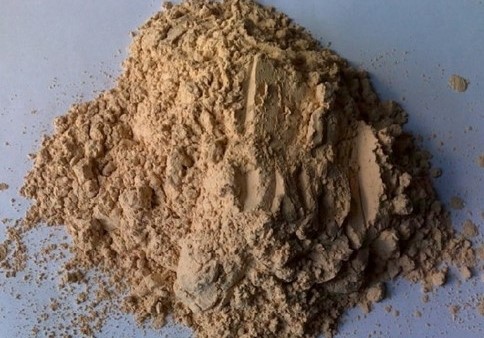
Diatomaceous earth contains a small amount of Al2O3, Fe2O3, CaO, MgO, K2O, Na2O, P2O5 and organic matter. SiO2 generally accounts for more than 80%, up to 94%. The iron oxide content of high-quality diatomite is generally 1~1.5%, and the alumina content is 3~6%. The mineral composition of diatomite is mainly opal and its variants, followed by clay minerals – hydromica, kaolinite and mineral debris. Mineral debris includes quartz, feldspar, biotite and organic matter. The content of organic matter ranges from trace to more than 30%. The color of diatomite is white, off-white, gray and light taupe, etc. It has the properties of fineness, looseness, light weight, porous, water absorption and strong permeability.
Mica and quartz are common minerals that play an important role in mineralogy. Although they are both silicate minerals, there are clear differences between them. First, mica and quartz are very different in appearance. One of its distinguishing features is that mica exhibits a layered structure that can be easily peeled off into thin flakes. Quartz, on the other hand, is a uniform crystal with no layered structure. Additionally, mica is usually dark in color, such as black, brown, or green, while quartz is usually clear or white. Secondly, mica and quartz also differ in their physical and chemical properties. The hardness of mica is usually between 2.5 and 4, which is relatively easy to be scratched; while the hardness of quartz is very high, 7, which is a very hard mineral. In addition, mica has good refractive properties and electrical properties, while quartz is an excellent piezoelectric material.

Comments
Post a Comment